How to Add Versioning to Enqueued Assets (Cache Busting) in WordPress
Loading CSS and JavaScript correctly is essential for WordPress performance, compatibility, and maintainability. Hardcoding <link> or <script> tags directly into templates often causes conflicts, duplicate loading, and cache issues.
This guide explains the proper way to enqueue CSS and JavaScript in WordPress, including dependencies, conditional loading, versioning, and performance best practices.
Why You Should Use wp_enqueue_style() and wp_enqueue_script()
WordPress provides a built-in asset management system. Using it correctly allows WordPress to:
- Prevent duplicate loading of the same file
- Handle dependencies automatically
- Control load order
- Append cache-busting versions
- Allow plugins and themes to interact safely
Never manually echo CSS or JS tags in header.php or footer.php.
Basic Structure: Where to Put the Code
Add enqueue logic in one of the following places:
- Child theme
functions.php - A dedicated include file (recommended), e.g.
/inc/enqueue.php - A custom plugin
Then hook into wp_enqueue_scripts.
Enqueue a CSS File
add_action( 'wp_enqueue_scripts', function() {

  wp_enqueue_style(
    'my-theme-style',
    get_stylesheet_directory_uri() . '/assets/css/style.css',
    array(),                // Dependencies
    '1.0.0',                // Version
    'all'                   // Media
  );

} );
Parameters Explained
- Handle: Unique ID (
my-theme-style) - Source: File URL
- Dependencies: Other styles that must load first
- Version: Used for cache busting
- Media: Usually
allorscreen
Enqueue a JavaScript File
add_action( 'wp_enqueue_scripts', function() {

  wp_enqueue_script(
    'my-theme-script',
    get_stylesheet_directory_uri() . '/assets/js/main.js',
    array( 'jquery' ), // Dependencies
    '1.0.0',
    true               // Load in footer
  );

} );
Footer Loading Matters
Setting the last parameter to true loads the script just before </body>, which improves perceived performance and avoids render blocking.
Use Dependencies Correctly
WordPress ships with registered scripts such as:
jqueryjquery-corewp-utilwp-i18n
Example: enqueue a script that depends on WordPress’s bundled jQuery.
wp_enqueue_script(
  'custom-slider',
  get_stylesheet_directory_uri() . '/assets/js/slider.js',
  array( 'jquery' ),
  '1.2.0',
  true
);
This ensures jQuery loads before your script.
Conditional Loading (Recommended)
Loading assets everywhere hurts performance. Load them only where needed.
Load CSS Only on a Specific Page
add_action( 'wp_enqueue_scripts', function() {

  if ( is_page( 'contact' ) ) {
    wp_enqueue_style(
      'contact-style',
      get_stylesheet_directory_uri() . '/assets/css/contact.css',
      array(),
      '1.0.0'
    );
  }

} );
Load JS Only on Single Posts
add_action( 'wp_enqueue_scripts', function() {

  if ( is_single() ) {
    wp_enqueue_script(
      'single-post-js',
      get_stylesheet_directory_uri() . '/assets/js/single.js',
      array(),
      '1.0.0',
      true
    );
  }

} );
Enqueue Scripts for the Admin Area
Use a different hook for admin pages.
add_action( 'admin_enqueue_scripts', function( $hook ) {

  if ( $hook !== 'post.php' && $hook !== 'post-new.php' ) {
    return;
  }

  wp_enqueue_style(
    'admin-editor-style',
    get_stylesheet_directory_uri() . '/assets/css/admin.css',
    array(),
    '1.0.0'
  );

} );
This avoids loading admin assets globally.
Pass PHP Data to JavaScript Safely
Never inline PHP variables directly into JS files. Use wp_localize_script().
wp_enqueue_script(
  'my-script',
  get_stylesheet_directory_uri() . '/assets/js/main.js',
  array(),
  '1.0.0',
  true
);

wp_localize_script(
  'my-script',
  'myData',
  array(
    'ajaxUrl' => admin_url( 'admin-ajax.php' ),
    'nonce'   => wp_create_nonce( 'my_nonce' ),
  )
);
Then access it in JavaScript:
console.log(myData.ajaxUrl);Versioning and Cache Busting
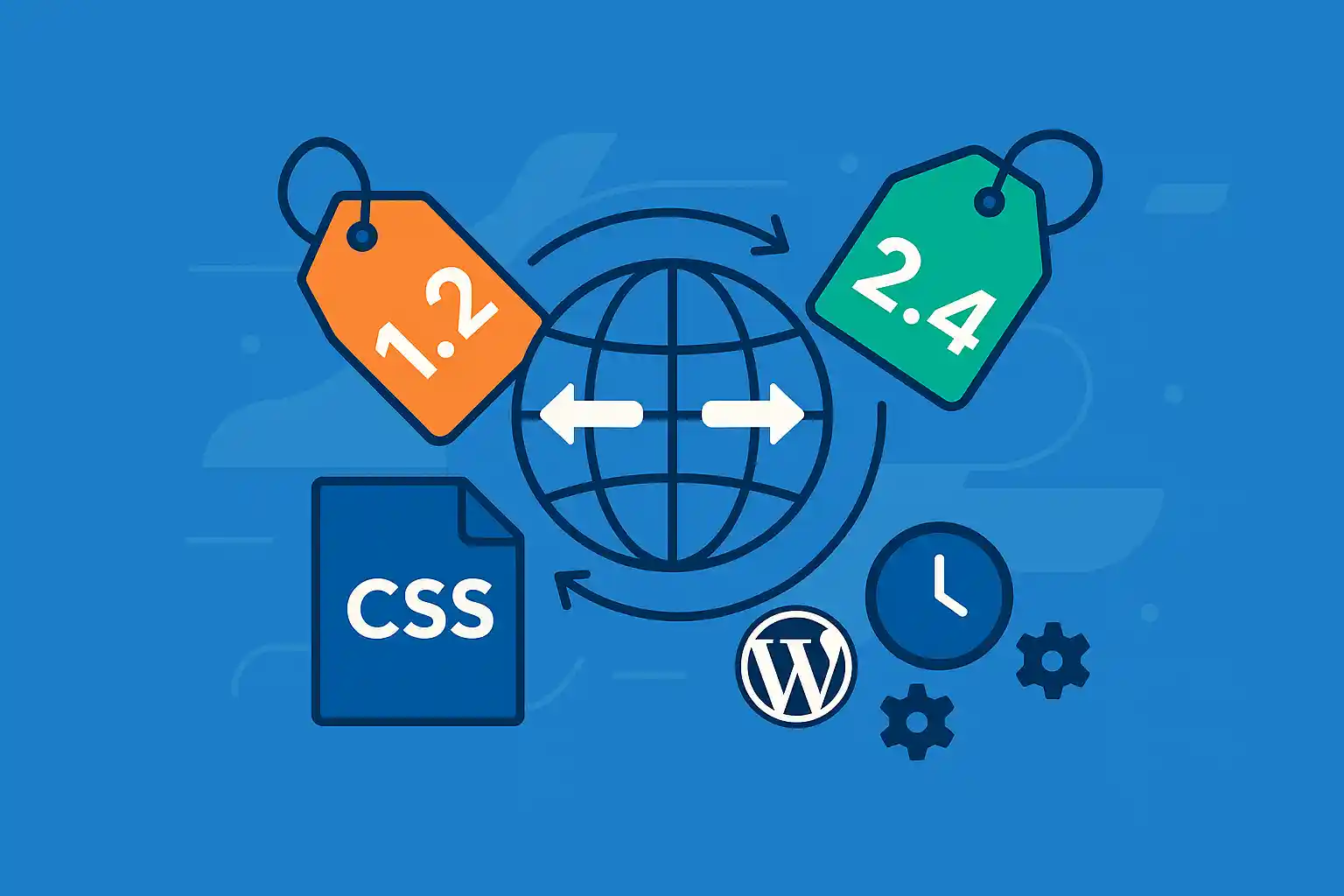
Browsers aggressively cache assets. Use versioning wisely.
Manual Version
'1.0.3'File Modification Time (Automatic)
$file = get_stylesheet_directory() . '/assets/css/style.css';

wp_enqueue_style(
  'theme-style',
  get_stylesheet_directory_uri() . '/assets/css/style.css',
  array(),
  filemtime( $file )
);
This forces browsers to reload the file when it changes.
Dequeue or Deregister Unused Assets
Some plugins load CSS/JS everywhere. You can safely remove them when not needed.
add_action( 'wp_enqueue_scripts', function() {

  if ( ! is_page( 'shop' ) ) {
    wp_dequeue_style( 'plugin-style-handle' );
    wp_dequeue_script( 'plugin-script-handle' );
  }

}, 100 );
Use tools like Query Monitor to find asset handles.
Common Mistakes to Avoid
- Hardcoding
<script>tags in templates - Loading assets globally “just in case”
- Using the same handle twice
- Forgetting dependencies
- Inlining sensitive data into JS files
Recommended Best Practices
- One responsibility per file (no giant JS bundles unless needed)
- Conditional loading by page or post type
- Footer loading for JS
- Automatic versioning with
filemtime() - Use Code Snippets or a custom plugin for enqueue logic
Conclusion
Properly enqueuing CSS and JavaScript is foundational to building fast, stable, and future-proof WordPress sites. By using WordPress’s enqueue system, you avoid conflicts, improve performance, and make your code easier to maintain.
Key takeaway:
Always enqueue → Load conditionally → Manage dependencies → Version your files → Never hardcode assets.
Mastering this pattern will immediately improve your WordPress development workflow.
🎨 Want to learn more? Visit our WordPress Customization Hub for tips and advanced techniques.