Block Patterns vs Reusable Blocks: Which Should You Use?
Block Patterns and Reusable Blocks solve similar problems in the Block Editor—but they are designed
for very different workflows.
Choosing the wrong one often leads to fragile content, unexpected global changes,
or editors being afraid to touch blocks.
This article explains the real difference between Block Patterns and Reusable Blocks,
when each one is appropriate, and how to avoid common structural mistakes.
High-Level Difference
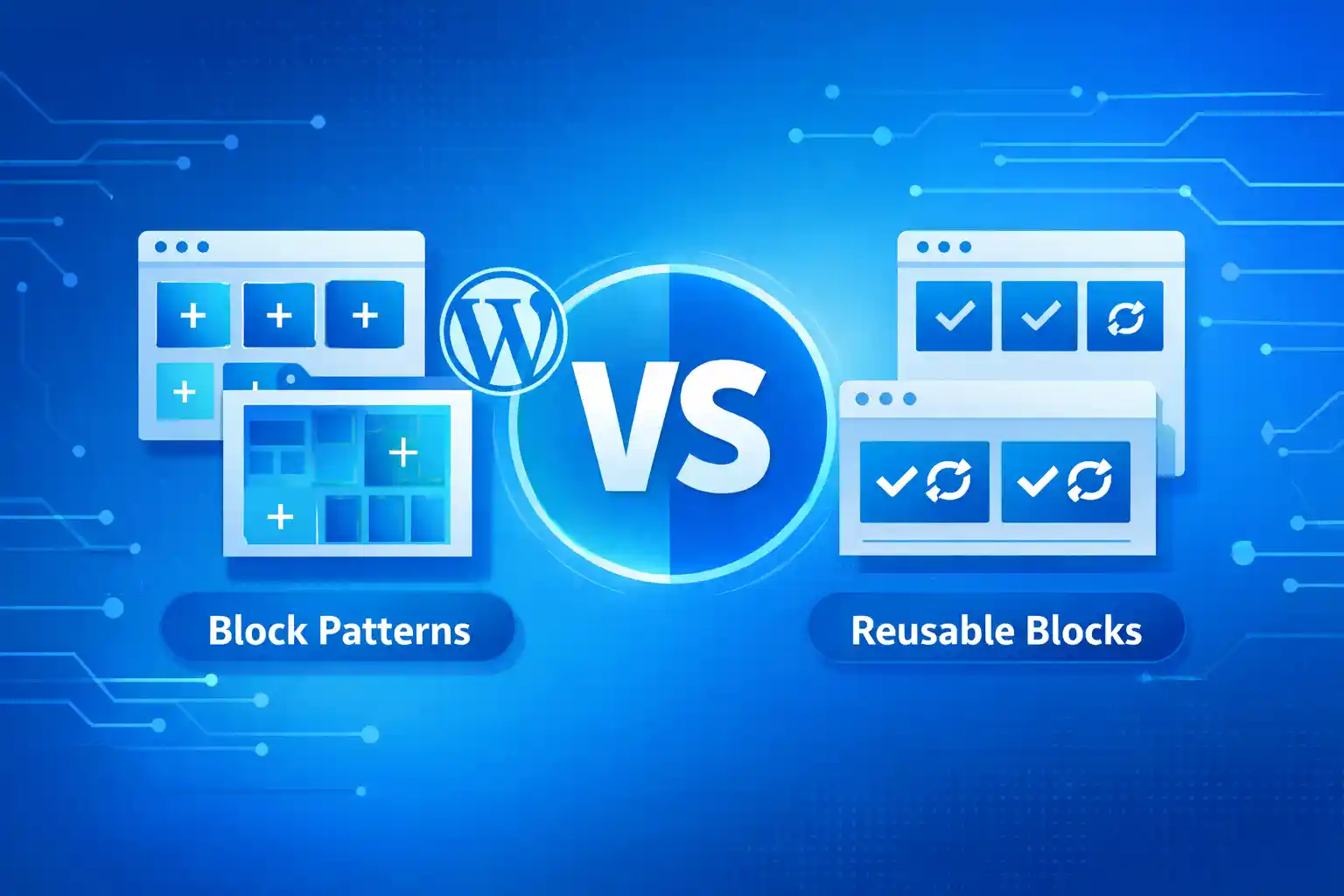
- Block Pattern = a template you insert once and then customize freely
- Reusable Block = a single shared instance reused across multiple pages
If you remember only one thing:
Patterns are for starting points. Reusable Blocks are for shared content.
What Block Patterns Are
A Block Pattern is a predefined collection of blocks.
When inserted, it becomes normal blocks—fully independent from the original pattern.
Key Characteristics
- Inserted as regular blocks
- No ongoing connection to the source
- Safe to edit per page
- Great for layout consistency
Typical Use Cases
- Hero section layouts
- Call-to-action sections
- Content templates (FAQ, feature lists)
- Landing page sections
Editor Behavior
Once inserted, editors can:
- Edit text freely
- Remove blocks
- Change styles without affecting other pages
There is no risk of global side effects.
What Reusable Blocks Are
Reusable Blocks are stored as separate entities.
When you insert one, you are inserting a reference—not a copy.
Key Characteristics
- Single shared definition
- Changes affect all usages
- Stored centrally
- Powerful but dangerous if misused
Typical Use Cases
- Legal disclaimers
- Site-wide notices
- Newsletter signup blocks
- Reusable CTAs that must stay identical
Editor Behavior
When editing a reusable block:
- Editors may not realize they are editing globally
- Changes propagate instantly across the site
- Mistakes are hard to trace
This is the number one source of “why did this change everywhere?” bugs.
Real-World Comparison
Example: Call-to-Action Section
Question: Should a CTA be a Pattern or a Reusable Block?
Use a Block Pattern if:
- Each page has different copy
- Design should be consistent, but content varies
- Editors need freedom
→ Block Pattern wins
Use a Reusable Block if:
- The CTA text must be identical everywhere
- You want one update to affect all pages
- Editors understand the global impact
→ Reusable Block wins
Common Anti-Patterns
Anti-Pattern 1: Using Reusable Blocks as Layout Templates
This causes:
- Accidental global edits
- Editors duplicating reusable blocks incorrectly
- Content coupling between unrelated pages
Layouts should almost always be patterns, not reusable blocks.
Anti-Pattern 2: Too Many Reusable Blocks
A site with dozens of reusable blocks becomes:
- Hard to audit
- Hard to onboard new editors
- Easy to break unintentionally
Reusable blocks should be rare and intentional.
Performance and Storage Differences
Block Patterns
- No runtime overhead
- Content stored inline with the post
- No extra queries
Reusable Blocks
- Stored as separate entities
- Resolved at render time
- Slightly more complex rendering path
Performance differences are usually minor—but patterns are simpler and safer.
Editorial UX Considerations
From an editor’s perspective:
- Patterns feel natural (“insert and edit”)
- Reusable blocks feel abstract (“am I editing globally?”)
Unless editors are trained, reusable blocks create hesitation and mistakes.
Recommended Strategy for Most Sites
- Use Block Patterns for:
- Layouts
- Page sections
- Design consistency
- Use Reusable Blocks only for:
- Legally required content
- True global components
- Content that must never diverge
If you are unsure, default to a Block Pattern.
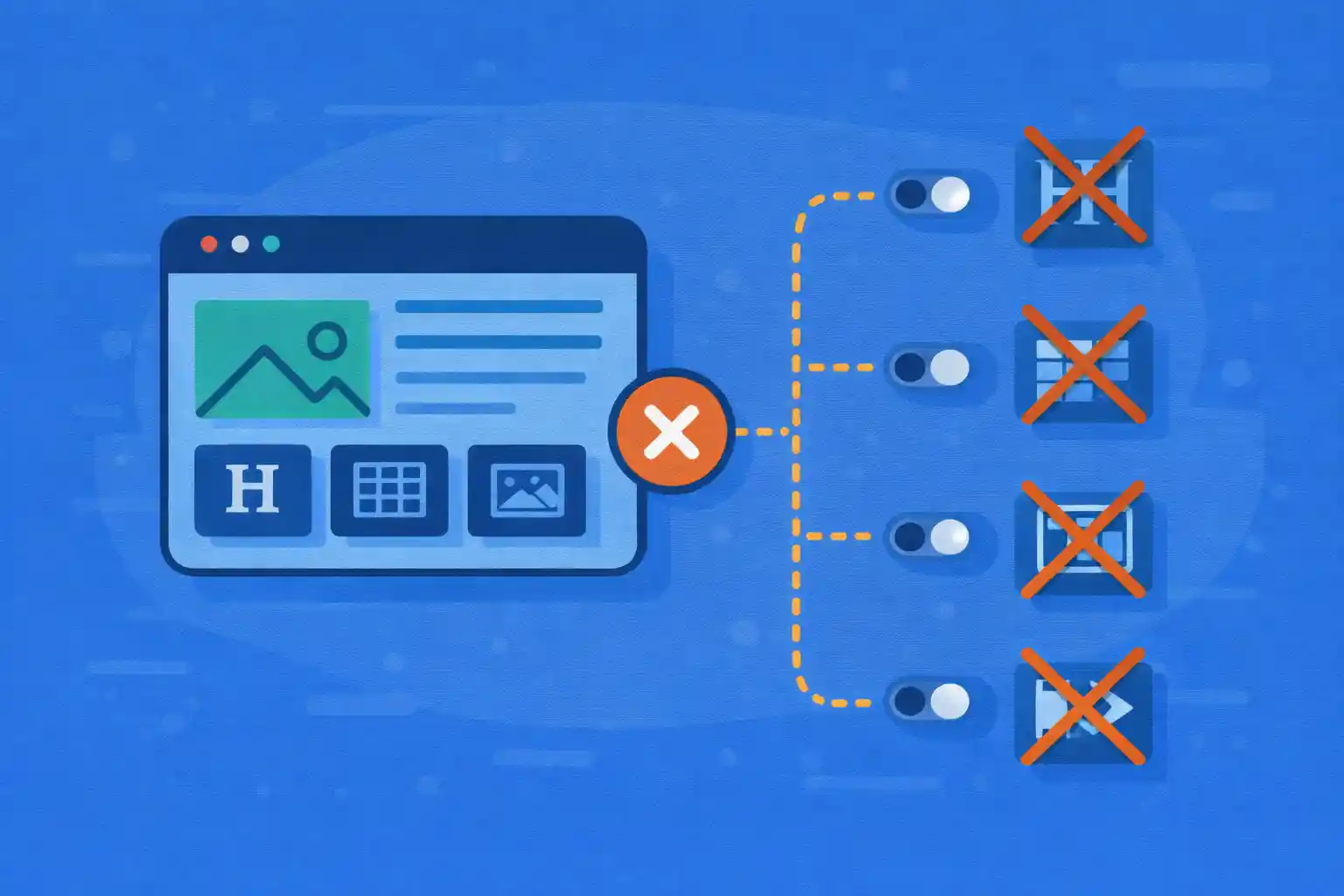
Optional Safety Measure: Disable Reusable Blocks
On sites where editors frequently make mistakes,
you can disable reusable blocks entirely:
<?php
add_filter( 'block_editor_settings_all', function ( $settings ) {
  $settings['enableReusableBlocks'] = false;
  return $settings;
} );
This forces a pattern-based workflow.
Decision Checklist
- Needs global updates? → Reusable Block
- Needs per-page customization? → Block Pattern
- Layout/template? → Block Pattern
- Legal/system content? → Reusable Block
Summary
- Block Patterns are templates, not shared instances
- Reusable Blocks are shared content with global impact
- Patterns are safer and more flexible for most use cases
- Reusable Blocks should be rare and intentional
- When in doubt, choose a Block Pattern
Understanding this distinction prevents one of the most common Gutenberg workflow mistakes
and leads to cleaner, safer WordPress content architecture.
🎨 Want to learn more? Visit our WordPress Customization Hub for tips and advanced techniques.