How to Use the Redirection Plugin in WordPress (301 Redirects, 404 Logs)
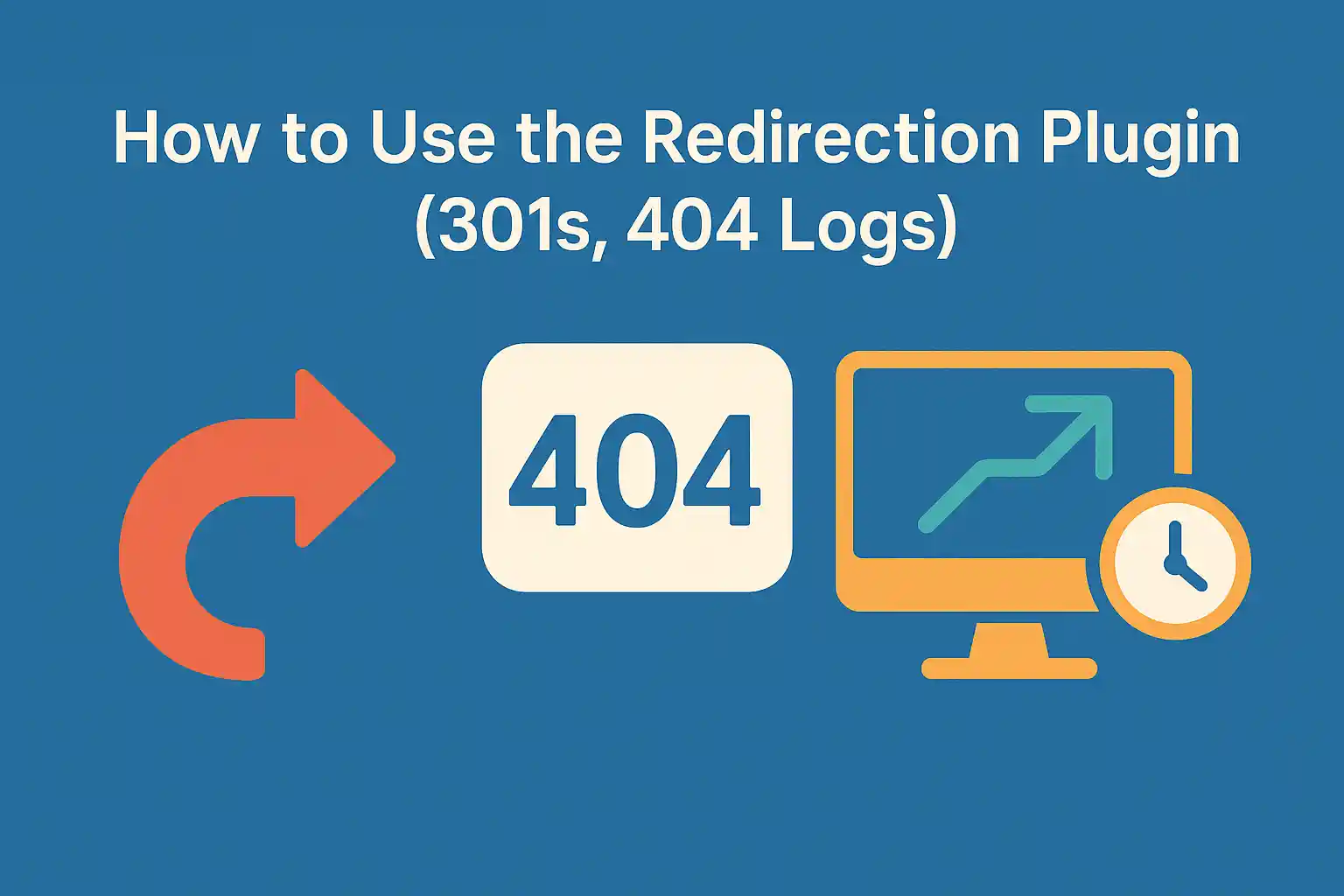
Redirection is one of the most powerful and user-friendly plugins for managing URL redirects in WordPress. Whether you’re fixing broken links, updating old slugs, moving content, or monitoring 404 errors, this plugin lets you handle everything without needing .htaccess edits or server access.
This guide walks you through using the Redirection plugin to create 301 redirects, track 404 errors, and clean up your site’s URL structure for better SEO and user experience.
What the Redirection Plugin Does
Redirection helps you manage URL changes safely by handling:
- 🔁 301 redirects (permanent URL changes)
- ❌ 404 error monitoring
- 📊 Redirect logs showing how often each rule is triggered
- 🛠 URL matching based on regex patterns
- 📂 Organizing redirects into groups
- 🚀 Automatic redirects when you change a post slug
It’s ideal for SEO, migrations, URL cleanup, and fixing broken internal or external links.
How to Install the Redirection Plugin
- Go to Plugins → Add New.
- Search for Redirection by John Godley.
- Click Install Now → Activate.
- Open Tools → Redirection.
During the setup wizard, allow the plugin to:
- Monitor permalink changes (recommended)
- Enable basic logging
How to Create a 301 Redirect
You can create redirects for changed URLs, deleted posts, or old site structures.
Step-by-Step: Add a Redirect
- Go to Tools → Redirection.
- Click the Add New button.
- Enter your Source URL — the old URL path.
- Enter your Target URL — the new destination.
- Choose 301 – Moved Permanently from the HTTP code menu.
- Click Add Redirect.
Example
Source URL: /old-blog-post/
Target URL: /new-blog-post/
Redirection will now automatically forward users and search engines to the new URL.
Using Regex and Wildcards
Redirection supports regex (regular expressions), which is useful for bulk redirecting entire URL structures.
Example: Redirect Everything in a Folder
Source URL: ^/old-folder/(.*)$
Target URL: /new-folder/$1
Enable Regex: ✓
This allows flexible and powerful redirect rules without editing server files.
How to Use Redirect Groups
You can organize redirects into categories such as:
- 📰 Blog migration
- 📁 Old product URLs
- 🌍 Legacy site redirects
- 🔧 Temporary redirects
This helps keep complex redirect systems clean and manageable.
How to Monitor 404 Errors
The plugin automatically logs 404 hits, showing you which URLs visitors are accessing that don’t exist.
To view the log:
- Go to Tools → Redirection → 404s.
The 404 log reveals:
- Broken internal links
- External sites linking incorrectly
- Bots scanning non-existent URLs
- Migrated content that needs redirecting
This helps you fix SEO problems quickly.
How to Turn 404 Logs Into Redirects
From the 404 log panel, you can convert any broken URL into a redirect with one click.
- Look for an incorrect or missing URL in the 404 list.
- Click Add Redirect next to it.
- Enter the correct destination URL.
- Save the redirect.
This is one of the fastest ways to clean up broken links across your site.
Automatic Redirects When You Change a URL Slug
If enabled during setup, Redirection automatically creates a redirect when you:
- Change a post or page slug
- Move content under a different parent
- Switch permalink structures
This prevents SEO loss from outdated URLs.
Importing & Exporting Redirects
Under the Import/Export tab, you can:
- Export redirects as JSON or CSV
- Import redirects from CSV
- Bulk add redirects for large migrations
This is essential when working with staging → production or when migrating entire websites.
Best Practices for Using Redirection
- Use 301 redirects for permanent URL changes
- Use 307 (temporary) only for short-term maintenance
- Clean old redirects regularly to avoid slowdowns
- Fix 404s weekly for SEO health
- Avoid redirect chains (A → B → C)
- Redirect only when necessary — not every historical variation
Conclusion
The Redirection plugin is a must-have for maintaining a healthy WordPress site. It simplifies URL management, SEO migration tasks, error monitoring, and redirect automation — all without touching .htaccess or server configuration.
With 301 redirects, 404 logs, regex rules, and automatic URL change detection, it’s one of the most powerful URL management tools available for WordPress.
Summary:
Install → Add 301 redirects → Monitor 404s → Clean up broken URLs → Optimize your site’s structure and SEO.
🔌 Looking for more? Check out our WordPress Plugins Hub to discover recommended tools and how to use them.