Related Posts Plugins vs Custom Code: What to Choose?
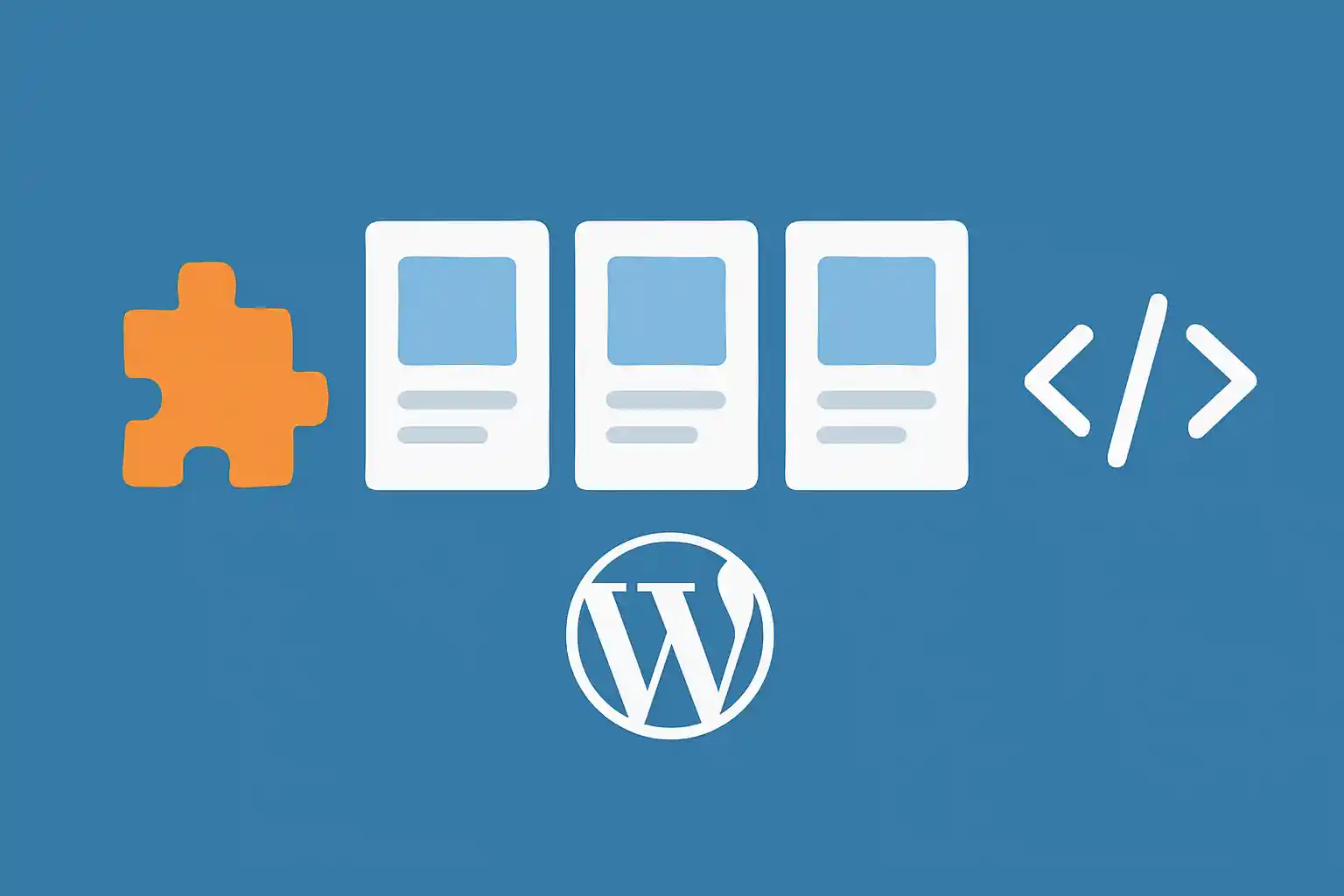
Adding related posts is one of the most effective ways to improve on-page engagement in WordPress. It increases page views, lowers bounce rate, and helps users discover more of your content. But the big question is: should you use a related posts plugin, or should you code it yourself?
This guide compares both approaches in terms of performance, flexibility, SEO, and maintenance — helping you decide the best option for your site.
Why Show Related Posts?
- Boosts time-on-site and user engagement
- Improves internal linking for SEO
- Helps readers navigate large content libraries
- Makes your blog feel more structured and connected
But the method you choose affects speed, accuracy, and maintainability.
Option 1: Using a Related Posts Plugin
Plugins automatically scan your content and display related posts using criteria such as tags, categories, keywords, or algorithmic similarity.
Pros
- Zero coding required
- Quick setup with customizable layouts
- Advanced matching algorithms (tags, categories, content analysis)
- Thumbnail support and design templates
- Widgets and Gutenberg blocks included
Cons
- Potential performance impact (database queries or heavy scripts)
- Some plugins create large index tables
- Less control over HTML structure and markup
- Risk of plugin bloat and additional maintenance
Recommended Plugins
- Yet Another Related Posts Plugin (YARPP) — Very flexible but heavy for large sites
- Contextual Related Posts — Fast and powerful algorithm
- Jetpack Related Posts — Offloads processing to WordPress.com servers
- Inline Related Posts — Great for in-article links
Plugins work well for beginners or sites where ease-of-use is more important than performance tuning.
Option 2: Using Custom Code
Custom-coded related posts usually rely on taxonomies — typically categories or tags — to determine related content. This gives you full control over performance and design.
Pros
- Fast and lightweight — only the queries you write run
- SEO-friendly with fully custom markup
- No extra plugins = fewer dependencies
- Easy to add caching or specific conditions
- Works perfectly for niche or structured sites
Cons
- Requires coding knowledge
- Limited algorithm unless you build additional scoring logic
- More hands-on maintenance when your theme evolves
Example: Related Posts by Category
 $categories,
  'post__not_in'   => [ get_the_ID() ],
  'posts_per_page' => 3,
];

$related = new WP_Query( $args );

if ( $related->have_posts() ) :
    while ( $related->have_posts() ) : $related->the_post();
        echo '' . esc_html( get_the_title() ) . '';
    endwhile;
    wp_reset_postdata();
endif;
?>
Example: Related Posts by Tags
 'ids'] );

if ( $tags ) {
  $args = [
    'tag__in'        => $tags,
    'post__not_in'   => [ get_the_ID() ],
    'posts_per_page' => 3,
  ];

  $related = new WP_Query( $args );
}
?>
Custom code is the preferred method for developers and performance-focused websites.
Performance Comparison
Plugins
- May run heavy queries on large sites
- Some plugins preload index tables to speed results
- Jetpack offloads load to cloud servers
Custom Code
- Only performs one or two optimized queries
- No extra scripts or styles
- Easy to cache using transients
If Core Web Vitals and page speed matter, custom code usually wins.
SEO Considerations
Plugins
- Often include thumbnails and schema-friendly markup
- May generate too many internal links if not controlled
Custom Code
- Gives complete control over anchor text and placement
- Lets you add contextual SEO logic
SEO-focused sites prefer custom code because every link can be intentional.
Maintenance & Flexibility
Plugins
- Easy to update and configure
- Dependent on plugin author updates
- Settings can change during plugin upgrades
Custom Code
- No dependency on third-party developers
- Design, logic, and output are fully customizable
- Requires developer involvement for major changes
Which Should You Choose?
Choose a Plugin If:
- You want a fast, beginner-friendly setup
- You prefer automatic matching algorithms
- You need Gutenberg blocks or widget support
- Your site has few performance constraints
Choose Custom Code If:
- You care about page speed and Core Web Vitals
- You want clean HTML and full design control
- Your site uses a consistent taxonomy structure
- You want highly tailored internal linking logic
Conclusion
Both related posts plugins and custom code have strong use cases. Plugins are convenient, feature-rich, and good for most casual websites. Custom code is lightweight, SEO-friendly, and ideal for performance-critical or highly customized WordPress builds.
Summary:
- Plugins → Easy, automatic, feature-rich
- Custom Code → Fast, flexible, developer-friendly
If you’re building a serious blog or want maximum performance, custom code is usually the better long-term choice — especially when combined with caching and structured taxonomies.
🔌 Looking for more? Check out our WordPress Plugins Hub to discover recommended tools and how to use them.